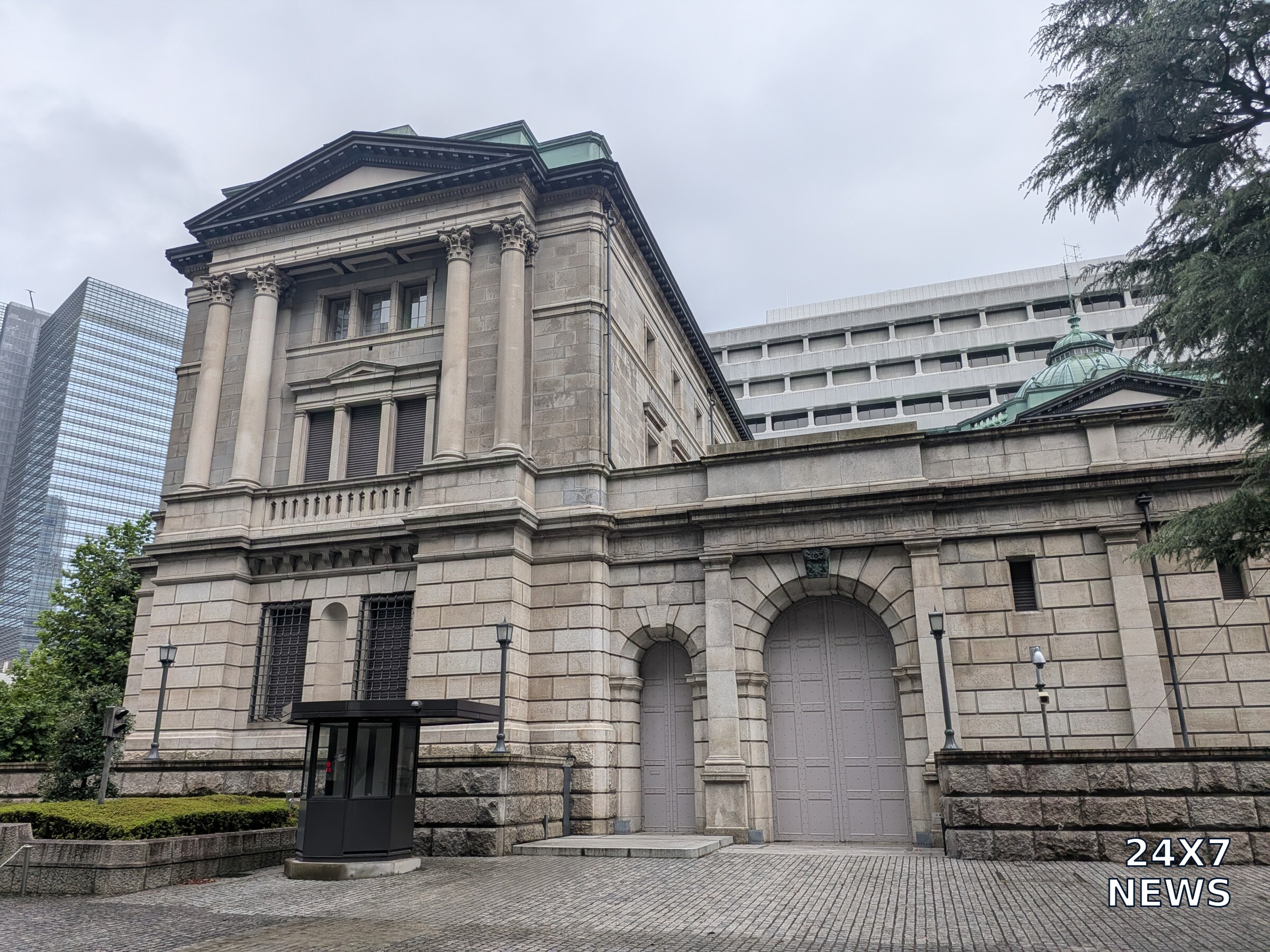
Bank of Japan policymakers broadly supported further interest-rate increases at their September meeting, with some members open to moving faster if inflation rises more than expected, minutes released Thursday showed.
The central bank raised its short-term policy rate from 1.0% to 1.25% at the September 17–18 meeting. That was the highest rate in 31 years and followed a June increase, shortening the interval between moves as officials responded to stronger price pressures.
According to the minutes, one board member said the pace of rate increases might need to accelerate if prices begin exceeding the bank’s projections. Another said policy should be adjusted in time to prevent inflation from becoming excessive and persistent.
A separate member argued that the policy rate should be moved closer to an appropriate level relatively soon so the bank would have more flexibility if economic conditions changed unexpectedly.
The minutes show that many board members expected consumer inflation to strengthen during the fall. They cited higher food prices and renewed increases in crude-oil costs tied to the prolonged Middle East conflict. Japan’s weak yen and strong global demand for artificial-intelligence infrastructure have also raised import and investment costs.
The board also discussed how high rates could ultimately rise without significantly slowing the economy. Bank staff estimate Japan’s nominal neutral interest rate — the level that neither stimulates nor restrains growth — within a broad range of 1.1% to 2.5%.
Members did not agree on a single endpoint. Some said the neutral rate could exceed 2%, while another warned that financial markets might be pricing a terminal rate higher than Japan’s wage and inflation trends justify.
The Bank of Japan held the policy rate at 1.25% at its October meeting. Reuters reported that many economists expect another increase to 1.5% in December, although future decisions will depend on inflation, wages, energy prices and financial conditions.
The minutes describe a September debate rather than a new policy decision. Their release matters because it provides a fuller record of how policymakers are assessing the speed and eventual limit of Japan’s tightening cycle, which can affect the yen, global bond markets and borrowing costs.
Sources: - Bank of Japan, minutes of the September 17–18, 2026 Monetary Policy Meeting: https://www.boj.or.jp/en/mopo/mpmsche_minu/minu_2026/g260918.pdf - Reuters: https://www.reuters.com/world/asia-pacific/boj-board-saw-need-keep-raising-rates-september-meeting-minutes-show-2026-11-05/